
Short description : HTTP2 Test

Wondering whether your website supports the HTTP/2 protocol? GeekFlare’s HTTP/2 Test gives you the answer in seconds. Find out how to use this tool and why HTTP/2 matters for your website’s performance.
Long Description : HTTP2 Test
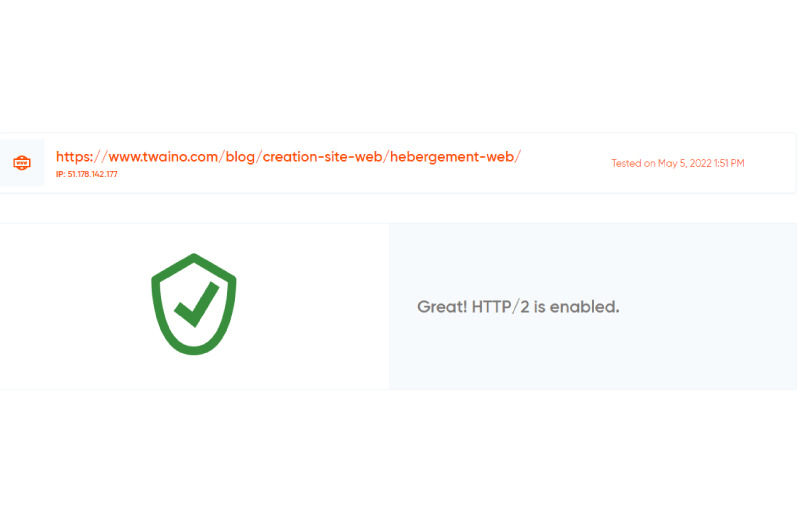
HTTP/2 Test: Check Your Website’s Speed with a Single Click
Website loading speed has long been recognized by Google as a ranking factor and is a key component of the user experience. This is where the HTTP/2 protocol comes into play—and, more importantly, why it’s essential to verify that it’s enabled on your server. The GeekFlare HTTP/2 test is part of the GeekFlare suite of website audit tools, designed to help webmasters, developers, and SEO specialists analyze and improve the performance of their websites. With this HTTP/2 checker, you can easily verify, for free, whether HTTP/2 is enabled on your web hosting account. In this article, we explain what HTTP/2 really is, how to quickly run an HTTP/2 test, and, most importantly, how to implement this protocol if your website doesn’t support it yet.What exactly is HTTP/2 ?
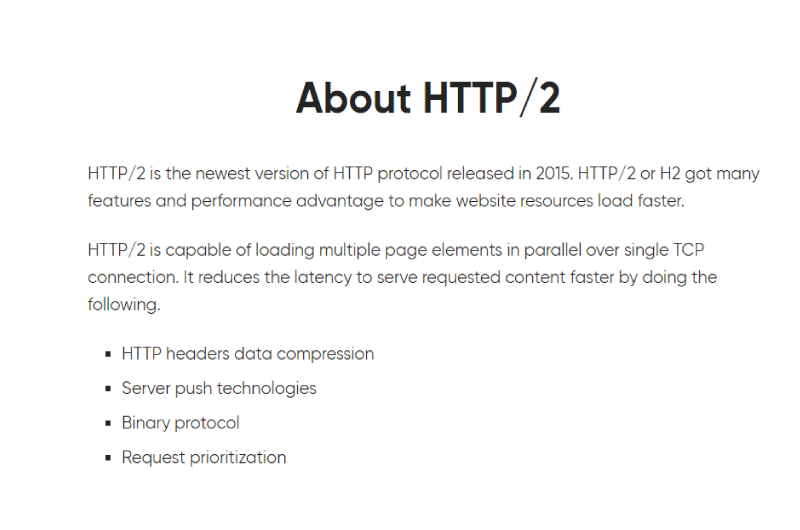
To fully appreciate the benefits of an HTTP/2 test, you first need to understand the specific advantages this protocol offers. HTTP/2 (sometimes referred to as H2) is the second major version of the HTTP protocol, released in 2015. This is the same protocol that your browser uses to communicate with web servers, but it is significantly more efficient than its predecessor, HTTP/1.1. More specifically, the following changes apply with HTTP/2:Full-duplex multiplexing
Instead of sending requests one at a time (as was the case with HTTP/1.1), HTTP/2 allows you to send and receive multiple requests simultaneously over a single TCP connection. As a result, your page loads much faster.Header compression
Every HTTP request contains headers, which can be quite large. HTTP/2 automatically compresses them, thereby reducing bandwidth usage.Server-side push notifications
The server can send resources to the browser even before the browser requests them. For example, when a visitor accesses your HTML page, the server can preload the CSS file and associated images.The binary protocol
Unlike HTTP/1.1, which uses text, HTTP/2 uses a binary format that is more compact and less prone to interpretation errors. When it comes to raw speed, there’s no one-size-fits-all figure: the speed improvement depends on your network, your browser, and your server configuration. However, tests conducted by Akamai and Cloudflare consistently show significant improvements in latency compared to the HTTP/1.1 protocol.Why should you run an HTTP/2 test on your website ?
Many website owners simply don’t know whether their hosting provider has enabled the HTTP/2 protocol or not. This is a problem because a website that still runs on HTTP/1.1 is missing out on free performance improvements. Here are the main reasons why you should run an HTTP/2 test on a regular basis:Performance and SEO
Google takes page load speed into account in its ranking criteria. A website that uses the HTTP/2 protocol loads faster, which can improve its ranking in search results.User experience
A fast-loading website encourages visitors to stay on the page. According to several studies, every additional second of loading time significantly increases the bounce rate. Security In practice, the HTTP/2 protocol is used almost exclusively with the HTTPS protocol. When you check for HTTP/2 support, you are also ensuring that your connection is encrypted.competitiveness
If your competitors have already enabled HTTP/2 and you haven’t, their websites offer a better user experience. By running an HTTP/2 test, you can make sure you don’t fall behind.How do I use the GeekFlare HTTP/2 test ?
One of the main advantages of this tool is its simplicity. No advanced technical knowledge is required to run an HTTP/2 test. Here’s how to do it in just a few steps:- Go to the “HTTP2 Test” page on GeekFlare.
- Enter your website’s URL in the field provided (the bar where www.example.com appears).
- Click the orange “Check HTTP/2” button and wait a few moments.
- This tool analyzes your website and clearly indicates whether HTTP/2 is enabled or not.
The HTTP/2 test in the GeekFlare website audit suite
The HTTP2 test is not a standalone tool: it is an integral part of the GeekFlare website audit suite, a comprehensive set of web analytics tools. This suite allows you to check numerous technical aspects of your website, and the HTTP2 test is a key component of it. Other tools available within GeekFlare’s website audit ecosystem include DNS checkers, response time tests, SSL certificate analyzers, and much more. The concept is simple: instead of constantly switching between different services, you have a single point of access to check your website from top to bottom. By combining the HTTP/2 test with these other tools, you’ll get a comprehensive overview of your website’s technical health. This is particularly useful if you’re planning a redesign, switching hosting providers, or simply conducting a technical SEO audit.How do you enable HTTP/2 on your server ?
If your HTTP/2 test shows that the protocol isn’t enabled yet, don’t panic. Setting up HTTP/2 is usually pretty straightforward and doesn’t necessarily require advanced technical knowledge. Here’s how to do it, depending on your server.Enable HTTP/2 on the Apache HTTP Server
To configure HTTP/2 on Apache, you must have a recent version of the server (at least version 2.4.17, although version 2.4.25 or later is recommended). If this is not the case, please update your installation first. Here are the steps:- Download the latest version of Apache (for example, version 2.4.25 on Linux).
- Unzip the downloaded file. If it is a .gz file, use the following command:
- Open the folder you created, then compile Apache with HTTP/2 support:
- Make sure no error messages appear, then start the installation:
- Save your httpd.conf file (default path: /etc/httpd/conf/httpd.conf).
- Open the file in a text editor and check if the following line is present; if not, add it:
- Next, add the “Protocols” declaration:
Enable HTTP/2 on Nginx
Good news for all Nginx users: HTTP/2 support has been natively integrated since version 1.9.5. Enabling it is very simple.- Create a backup copy of your nginx.conf file (default path: /etc/nginx/nginx.conf).
- Open the file and add the http2 parameter to the “listen” directive in your server block:
Enable HTTP/2 via a CDN
If your website is hosted on a CDN, you probably don’t need to do anything. Most major CDN providers already support HTTP/2 by default. These include:- Cloudflare
- You
- Encapsuler
Common issues detected during an HTTP/2 check
When you use an HTTP/2 checker and the result is negative, there are several possible causes. Here are the most common situations we encounter:- No SSL certificate: HTTP/2 requires an HTTPS connection. If your site does not have an SSL certificate installed, the protocol cannot be enabled. The simplest solution is to install a free certificate via Let’s Encrypt.
- Server version is too old: Older versions of Apache or Nginx do not support HTTP/2. Check your version and update it if necessary.
- Incompatible shared hosting: Some shared hosting providers have not yet enabled HTTP/2 on their servers. In this case, contact your hosting provider or consider switching to a compatible plan.
- HTTP/2 module not loaded: even if your server supports HTTP/2, the corresponding module must be explicitly enabled in the configuration (such as mod_http2 for Apache).
Best practices after enabling HTTP/2
Enabling HTTP/2 is an excellent first step, but it’s not enough to fully optimize your site’s performance. Here are a few recommendations for getting the most out of the protocol:- Enable Gzip or Brotli compression to further reduce the size of the files being transferred.
- Use server push sparingly. Push only critical resources (main CSS, essential fonts) to avoid overloading the connection.
- Reduce the number of external domains. HTTP/2 multiplexing works on a per-connection basis: each third-party domain requires a separate connection.
- Use the tools in the GeekFlare Website Audit suite to regularly monitor your site’s overall performance, beyond just the HTTP/2 check.
- Combine the HTTP/2 test with a page speed test (such as Google PageSpeed Insights) to measure the actual impact on your load times.
Videos : HTTP2 Test
Images : HTTP2 Test
Company : HTTP2 Test

GeekFlare is a UK registered company specializing in publishing IT articles. It was created in 2015 by Chandan Kumar. Apart from publishing articles, GeekFlare also provides companies and individuals with tools and APIs that can help them develop and improve their IT performance.
GeekFlare is heavily invested in providing solutions to computer problems. To date, nearly 1,900 articles have been published by the company. Most of the articles published relate to:
- the Web;
- cloud computing;
- computer security;
- growing businesses;
- etc
Contact : HTTP2 Test
- HTTP2 Test
- Check the Corporate Website
Social Media : HTTP2 Test
- Youtube
Others Tools : HTTP2 Test






 Alexandre MAROTEL
Founder of the SEO agency Twaino, Alexandre Marotel is passionate about SEO and generating traffic on the internet. He is the author of numerous publications, and has a Youtube channel which aims to help entrepreneurs create their websites and be better referenced in Google.
Others SEO Tools


All SEO Tools
Sorry, no content found.